Let’s be real for a second: after a long day of juggling emails, commuting, and trying to keep your life together, the last thing you want to do is spend thirty minutes "prepping" your hair for bed. If you’ve spent any time on Instagram or TikTok lately, you’ve likely seen the viral overnight routines involving complicated braids, scalp massages, and expensive overnight masks that leave your pillow smelling like rosemary oil.
During my nine years working in salons, I’ve heard the same frustration from clients time and time again: "I just want to wake up without a bird's nest on my head, but I don't have the energy for a complex low effort hair routine."
The good news? You don’t need an elaborate ritual to maintain hair health. In fact, when it comes to overnight hair protection, simple is almost always better. It’s not about adding steps; it’s about changing the environment your hair lives in for those eight hours you’re unconscious.
The Physics of Sleep: Why Your Hair Hates Your Pillow
If you wake up with frizz, tangles, or breakage near the nape of your neck, you are experiencing the cumulative effect of overnight friction. Think of your hair strands like delicate silk threads. When you toss and turn, those strands are constantly rubbing against your pillowcase. Over time, this mechanical friction lifts the hair cuticle, leads to breakage, and ruins your blowout or style.
Most standard pillowcases are made of cotton. While cotton is great for breathability in your clothes, it’s a nightmare for hair. Cotton fibers are porous and textured on a microscopic level, meaning they act like sandpaper against your hair shaft. Worse yet, cotton is highly absorbent; it wicks moisture away from your hair, leaving it dry and prone to snapping by the time your alarm goes off.
Prevention Beats Repair Every Time
I’ve seen clients spend hundreds of dollars on bond-building treatments and split-end sealers, only to undo that progress by sleeping on abrasive fabrics. In the salon world, we live by a golden rule: prevention beats repair. It is infinitely easier to keep your hair healthy by mitigating damage at night than it is to mask the damage with expensive serums once the cuticle is already frayed.
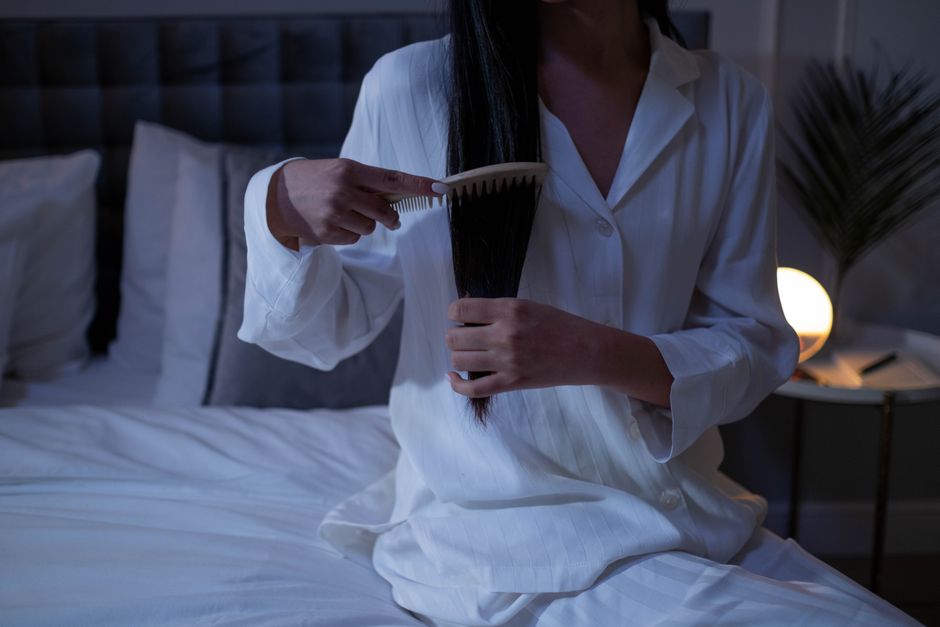
The best bedtime hair care is the kind you can do in three seconds—or even zero seconds—by simply switching your equipment.
The Silk Solution: Why It’s the Gold Standard
If you want a low-effort way to save your hair, the single most effective investment is switching to silk. Unlike cotton, silk is smooth. It doesn't snag, it doesn't pull, and it doesn't strip your hair of its natural oils.
When I started recommending silk accessories, the feedback was immediate. Clients who struggled with dryness or stubborn knots noticed a difference within three days. Brands like Silk Bonnet World have become staples for a reason—they prioritize the high-grade material required to actually protect the hair cuticle, rather than just selling "satin-feel" synthetic blends that don't offer the same benefits.
A silk bonnet or a high-quality silk pillowcase creates a "slip" environment. Your hair glides over the surface as you move, meaning there is zero friction. It’s the ultimate lazy-girl hack: you get all the benefits of a protective style without ever having to learn how to French braid your own hair.
Comparison: Cotton vs. Silk
To put this into perspective, here is how your hair interacts with different surfaces while you sleep:
Feature Standard Cotton Silk Friction Levels High (causes tangles) Near-zero (promotes shine) Moisture Retention Absorbs oils from hair Preserves natural hydration Cuticle Health Leads to roughness/frizz Keeps cuticles sealed Effort Required Zero Zero (once set up)How to Integrate Low-Effort Protection
You don't need to overhaul your life to see results. Here is my "receptionist-approved" guide to protecting your hair frizz control sleep with the absolute minimum amount of effort.
1. The "Set and Forget" Method
If you have long hair or extensions, the easiest way to prevent tangles is a loose top-knot secured with a silk scrunchie. Do not pull it tight—that causes tension breakage. Just gather your hair at the very crown of your head and secure it loosely. Combine this with a silk pillowcase, and you’ve eliminated the friction of your hair rubbing against your shoulders all night.

2. The Bonnet Strategy
If you are a restless sleeper, a silk bonnet (like those from Silk Bonnet World) is your best friend. Why? Because even if you move, your hair is contained in a friction-free sanctuary. I know, I know—the "bonnet look" isn't always the vibe you want for a date night, but for those nights where you just want to wake up and head straight to work, it is a game-changer.
3. Ditch the Product Overload
Stop applying heavy creams or oils right before bed unless you have extremely dry, coarse hair. Most of the time, these products just end up on your pillowcase or clogging your pores. Focus on the *surface* you are sleeping on. If your hair is protected by silk, it will hold its natural moisture balance naturally without needing a mountain of leave-in conditioners that make your hair feel greasy by morning.
Common Myths Debunked
Because I’ve spent years listening to the "internet versus reality" debate, let’s clear up a few things I see on TikTok and Instagram all the time:
- Myth: You need to brush your hair 100 times before bed. Reality: This is a great way to snap your hair. Detangle gently, and only once. Myth: You must oil your scalp every night. Reality: Over-oiling can lead to scalp congestion and dandruff. Unless you have a specific scalp condition, leave the oiling for a once-a-week treatment. Myth: Protective styles (like tight braids) are always good. Reality: Tight braids cause "traction alopecia" if worn too often. If you braid for sleep, keep it very loose.
The Bottom Line: Don't Overthink It
The beauty industry thrives on making you feel like your hair is a project that needs constant maintenance. But looking at your hair as a "maintenance project" is exactly how you end up with damage. Your hair is an accessory that should work for you, not the other way around.
By investing in a silk pillowcase or a high-quality bonnet, you are putting your bedtime hair care on autopilot. You save time in the morning because you aren't fighting tangles, you save money on repair products because you’re preventing breakage, and most importantly, you get to keep your routine truly low-effort. Sleep is for resting—your hair should be resting, too, not fighting a battle against your bedding.
Next time you’re scrolling through Instagram and feel pressured to start a complicated, time-consuming nightly ritual, remember: the best overnight hair protection is often the one that happens while you're fast asleep, without you doing a thing.