Back when I spent my weekends glued to a CRT television playing the SNES or the Sega Genesis, a game was "finished" the moment the cartridge hit the shelf. If there was a bug, or if a weapon was laughably overpowered, you lived with it. You learned the exploits. You mapped the glitches. Today, the landscape of the PC, console, and mobile gaming industries has shifted entirely toward the "live service" model, where the game you play today might feel fundamentally different by next Tuesday.
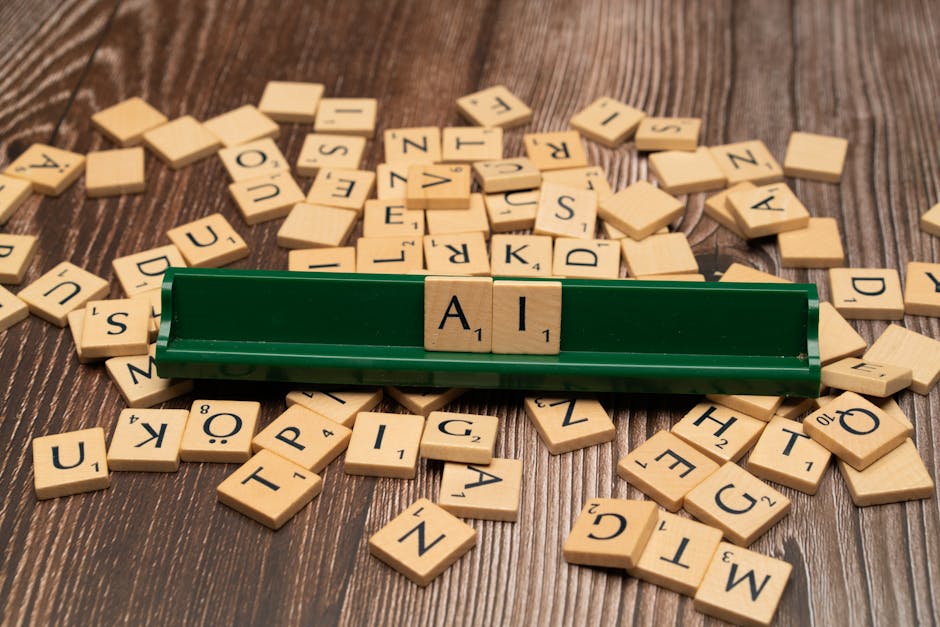
As a moderator who has spent years watching the discourse in comment sections, I have seen the frustration firsthand. Why do games seem to need a 10GB patch every single week? Is it just developers being sloppy, or is there a systematic push toward AI-driven game balancing? Let’s pull back the curtain on the industry’s obsession with live patches and player data tuning.
The Shift to Always-Connected Gaming
The transition from the arcade era to the current era of ubiquitous online connectivity has been absolute. In the 90s, you competed with the person standing next to you in an arcade cabinet. Now, you are competing against millions of players across PC, console, and mobile platforms simultaneously. This change in scale necessitated a change in maintenance.
Because these games are now "always-connected," developers have constant access to telemetry. They don't have to guess if a gun is too strong or a character class is underperforming; the player data tuning feedback loop tells them exactly what is happening in real-time. If the stats show that 90% of players are choosing the same loadout, developers intervene to "balance" the experience. It is rarely about fixing a broken game—it is about keeping the meta-game moving to keep you engaged.
The Analytics Behind the Scenes
Companies like NICE and Releaf have become massive players in the background of game development. They provide the analytics infrastructure that allows developers to ingest millions of data points every hour. Through cloud gaming services and integrated telemetry, studios can identify "pain points" in the player journey faster than ever before.
When you see a patch note that says "adjusted weapon damage for balance," it is often the output of an algorithm analyzing win rates across thousands of matches. It is not necessarily a human designer tinkering with values in a vacuum. It is a machine learning model suggesting an adjustment to keep the win/loss ratios as close to 50% as possible. While this sounds efficient, it often results in the "moving goalposts" problem that keeps players in a constant state of relearning the game.

The Realities of Hardware Investment
It is important to remember that this "live" experience is heavily tiered based on your equipment. You might be playing on a high-end $1,000+ hardware setup (as recently discussed on NoobFeed) or grinding out matches on a budget mobile device. The balancing algorithms have to account for these massive performance discrepancies. A frame-rate advantage on a high-end PC often means a player can react faster than someone on a mid-range console. The constant patches are, in part, an attempt to normalize the playing field across these disparate platforms.
Era Patch Frequency Balancing Method 1990s (Cartridge) Zero Player Adaptation 2000s (Early Online) Low (Major Updates) Manual Testing 2024 (Live Service) High (Weekly/Bi-weekly) AI/Player Data TuningSpectatorship and Streaming Culture
We cannot talk about patch frequency without mentioning streaming. The growth of Twitch and YouTube means that if a new "broken" strategy is discovered, it is broadcast to millions of viewers within hours. In the old days, a secret trick might stay local to your neighborhood for months. Today, the entire global community adopts a new exploit in under an hour.
This puts immense pressure on developers to push live patches immediately. If a streamer shows off an AI-assisted strategy or a game-breaking glitch, the community starts screaming for a fix. Developers are terrified of "dead" streaming categories, so they prioritize rapid balance changes to keep the game appearing healthy and fair for viewers. It is a performative cycle: the game changes to accommodate the stream, which encourages more streaming, which necessitates more changes.
The Burnout Tax
As someone who has moderated community forums for years, I have to talk about the human cost of this. The modern industry model demands that you stay "current." If you take a month off because of work or life, you come back to find that your favorite character has been nerfed, the meta has shifted, and your muscle memory is obsolete. This constant cycle creates a sense of professional-grade stress in what should be a casual hobby.
I see users posting at 3:00 AM, fueled by caffeine, trying to grind through a "battle pass" before the next update resets their progress. Sleep hygiene in the gaming community is abysmal, and it is exacerbated by the "Fear Of Missing Out" (FOMO) that these constant updates generate. If you are reading this and you feel exhausted, step away from the PC or console. The game will still be there tomorrow, and frankly, you how voice chat changed gaming will be a better player after seven hours of sleep than after a night of frustrated grinding.
Are Live Patches Actually Improving Gaming?
There is a segment of the community that believes all this AI-led data tuning makes games "soulless." I think that is an overly simplistic take. I don't hate the idea of a game being supported after launch. I loved it when games started getting content updates that expanded their worlds. However, there is a clear difference between adding meaningful content and constantly tweaking numbers to force engagement.
When I look at the current state of the industry, I see a few key takeaways:
Connectivity is a double-edged sword: It allows for global communities, but it also allows developers to push updates without having to ensure the game is perfect at launch. Data can be misinterpreted: Just because a weapon is used often doesn't mean it is overpowered; it might just be the most "fun" to use. AI balancing often misses the "fun factor" in favor of pure statistical parity. Community health matters: When a game changes every week, it makes it impossible to build a stable competitive scene or a consistent learning environment for new players.Final Thoughts: Moderation in the Age of Constant Change
The next time you see a massive patch announcement for your favorite PC or console title, take a moment to look at the notes. Ask yourself if the changes are actually solving a problem or if they are just data-driven responses to player usage patterns.
As gamers, we need to push back against the idea that "more updates equals better service." Sometimes, a game just needs to be left alone so we can enjoy it. Don't fall for the marketing buzzwords that frame every balance patch as a "quality of life improvement." Most of the time, it’s just the algorithm turning the knobs to make sure you stay in the loop for just a little bit longer.
If you find yourself constantly stressed about keeping up with the latest balance patch, take a break. Your console, PC, or mobile device isn't going anywhere. Go get some sleep. The "optimal" meta will still be there when you wake up, and your brain will perform much better without the exhaustion of a 48-hour grind.